A convincing karat stamp does not establish purity. Learn how counterfeit marks, plating and mixed components can mislead, and what professional testing adds.
A 24K coating is different from an item made of gold throughout. Learn what plated markings mean and why construction changes the value of gold-colored jewelry.
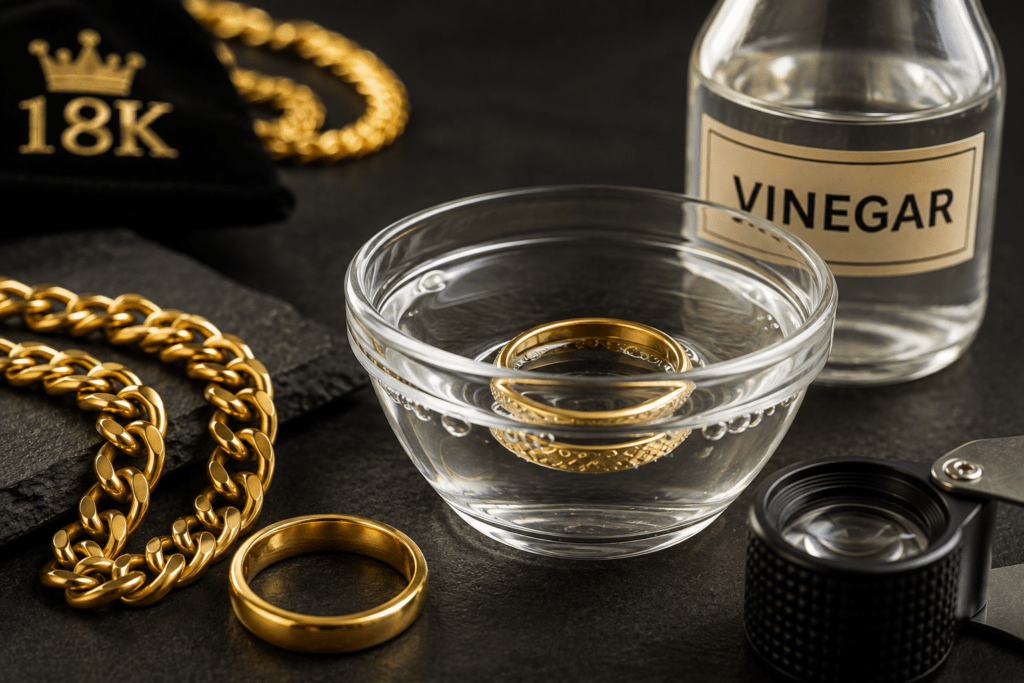
Vinegar reactions cannot reliably establish gold purity. Learn why plated and non-gold items can pass, and which testing methods provide stronger evidence.
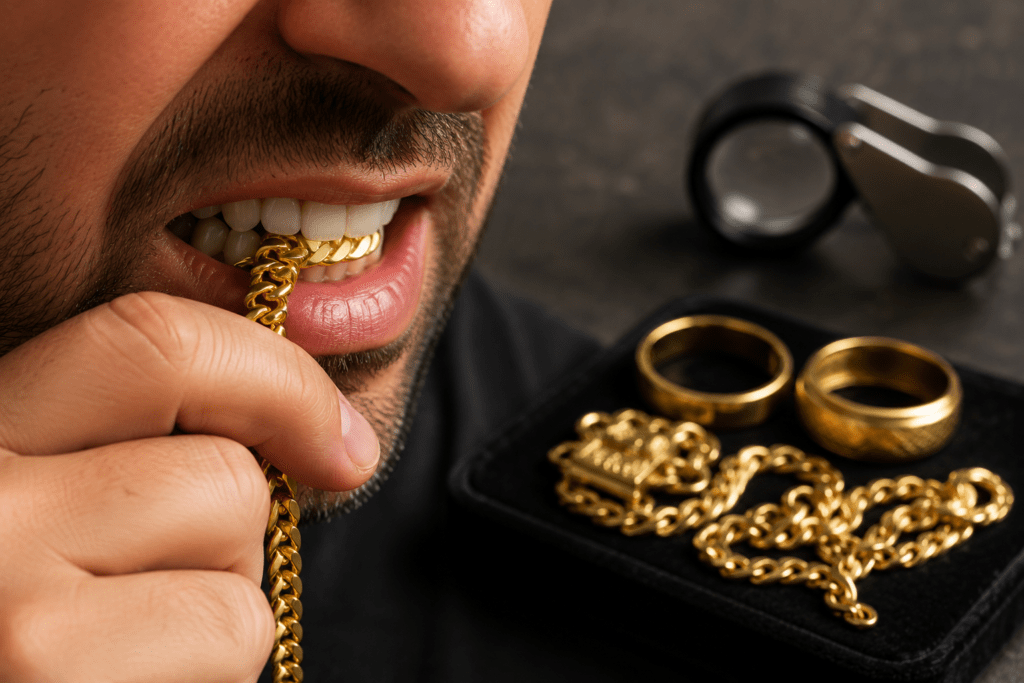
A tooth mark cannot identify gold or its karat. Learn why the bite test is unreliable and why jewelry and coins need more appropriate authenticity checks.
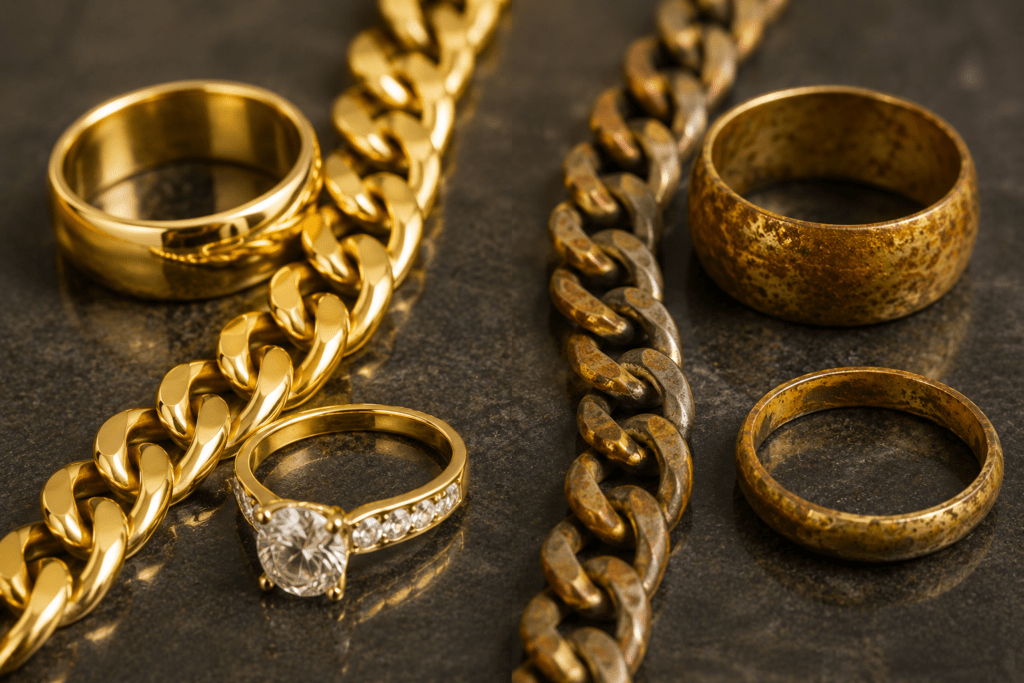
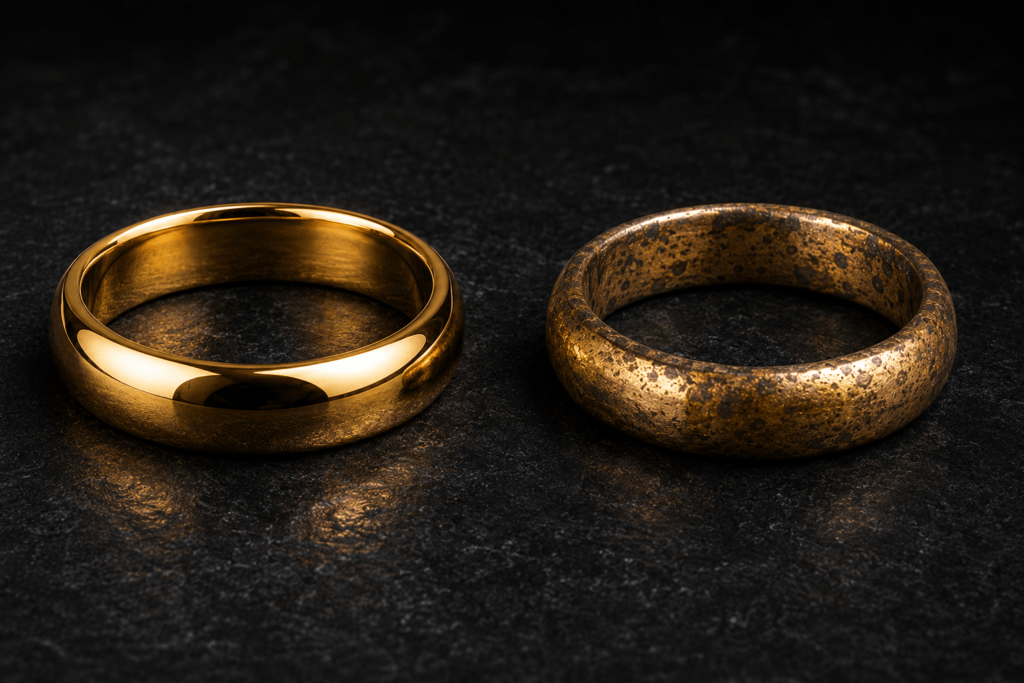
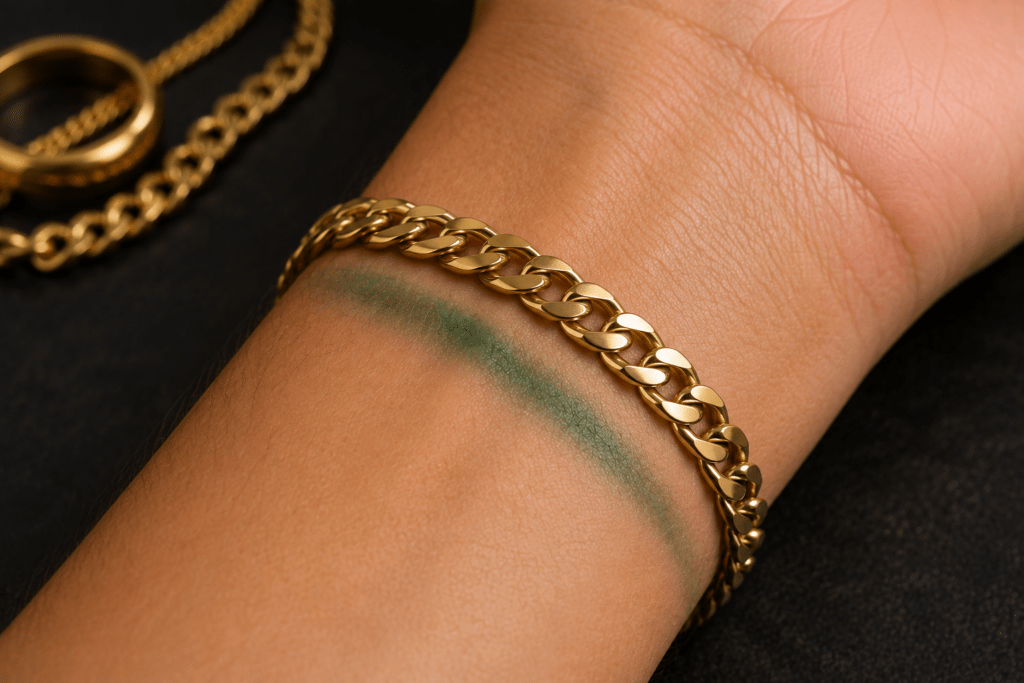
Pure gold does not rust, but alloys, plating and other components can discolor. Learn what brown, red, green or black changes may mean before judging a piece.
Real gold can sometimes tarnish—but the gold itself usually is not the problem. Learn why 10K, 14K, and 18K gold can discolor, why 24K behaves differently, and when tarnish should make you consider professional gold testing.
Counterfeit stamps, plated jewelry, fake bullion and convincing packaging can mislead buyers. Learn which claims need checking before a gold transaction.