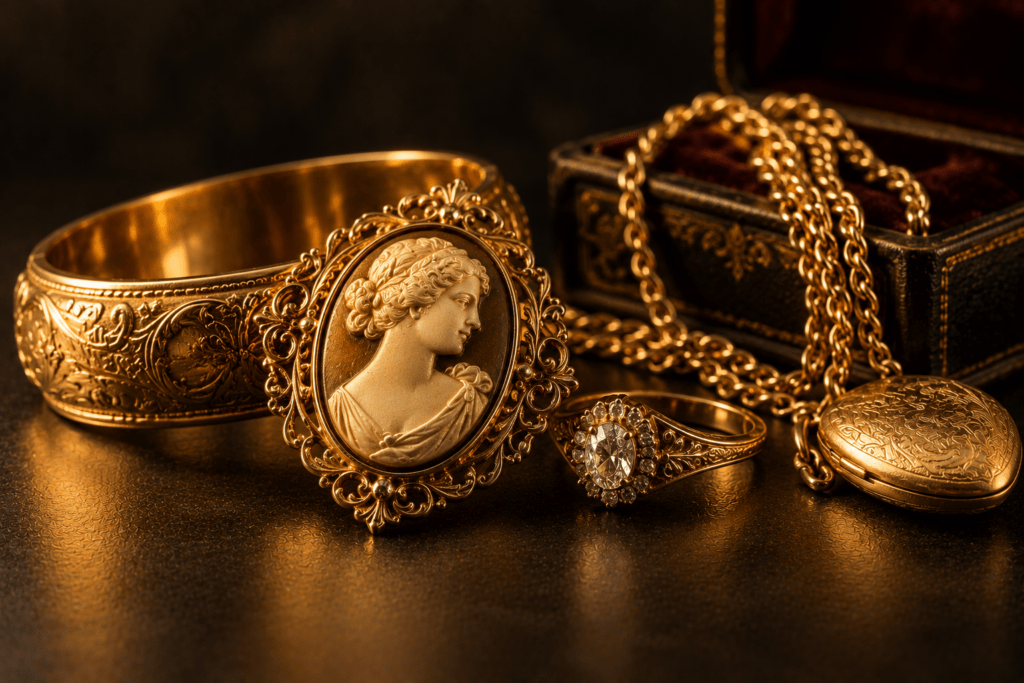
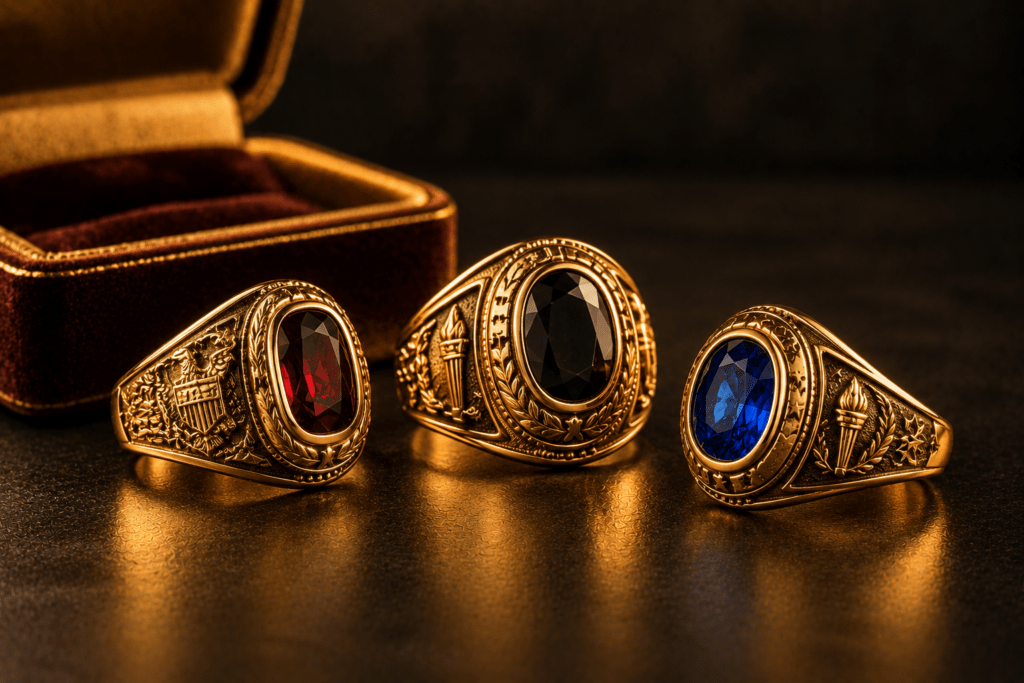
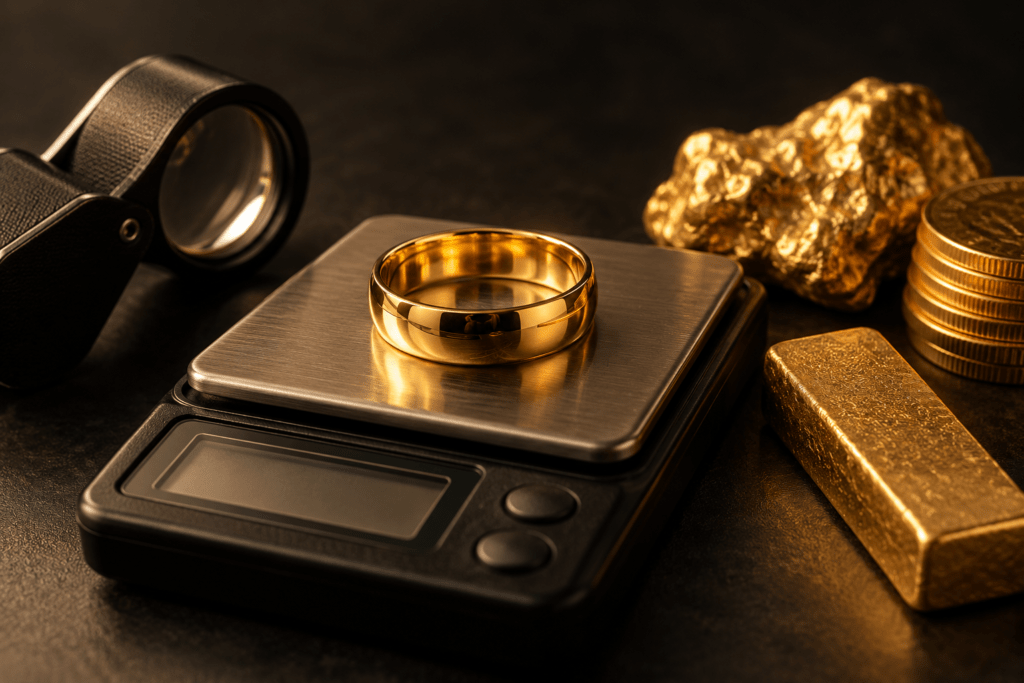
Learn about gold rings, chains, bracelets, earrings, class rings, broken jewelry, hollow and solid jewelry, designer pieces, and the factors that affect their value.
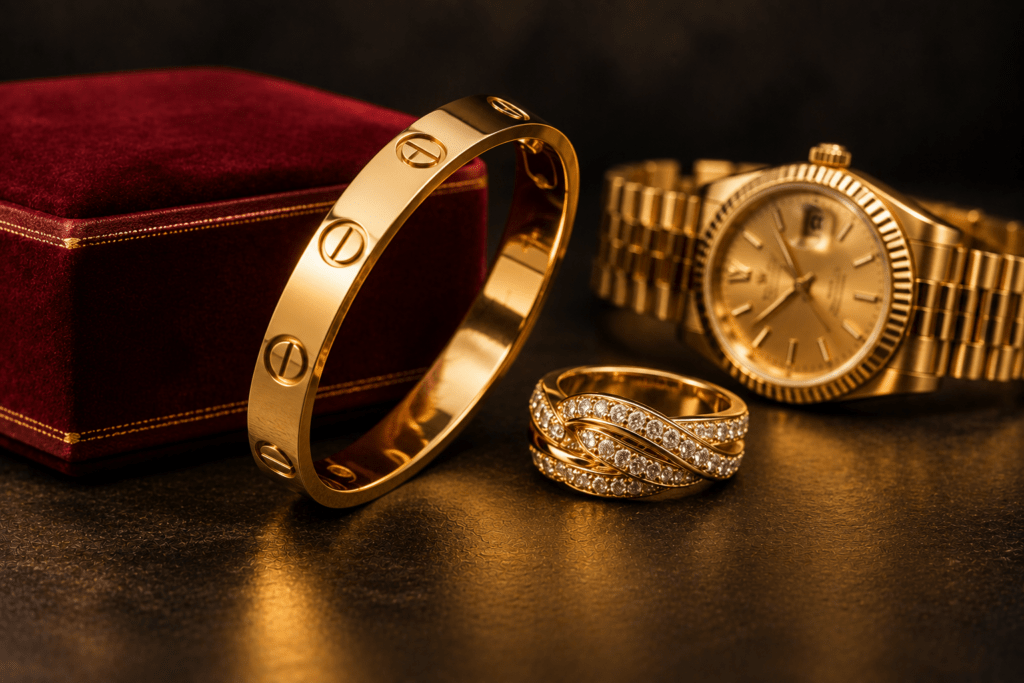
Recognized design, authenticity, condition and demand can make gold jewelry worth more intact. Learn what to evaluate before treating a designer piece as scrap.
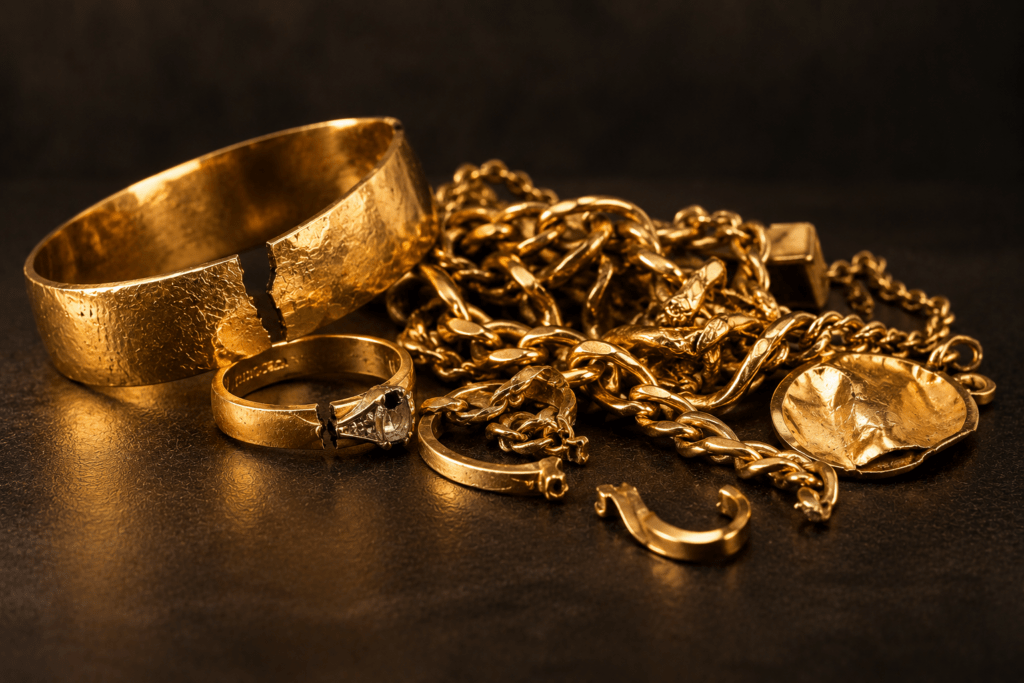
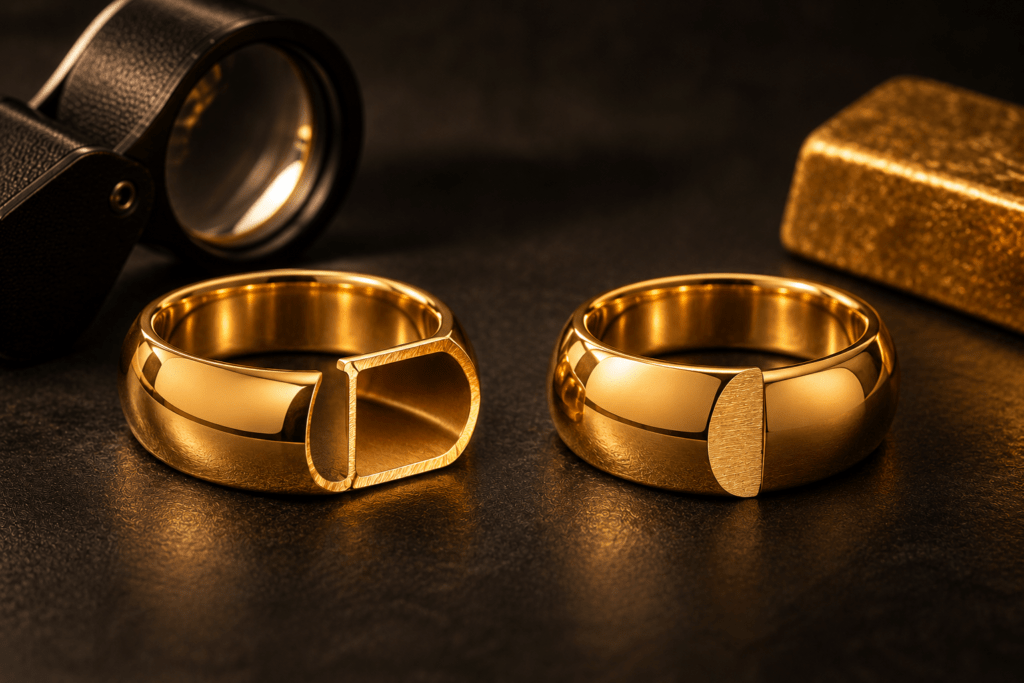
Broken or bent jewelry retains the value of the gold still present. Learn when missing metal, damaged stones or lost resale appeal can change an offer.
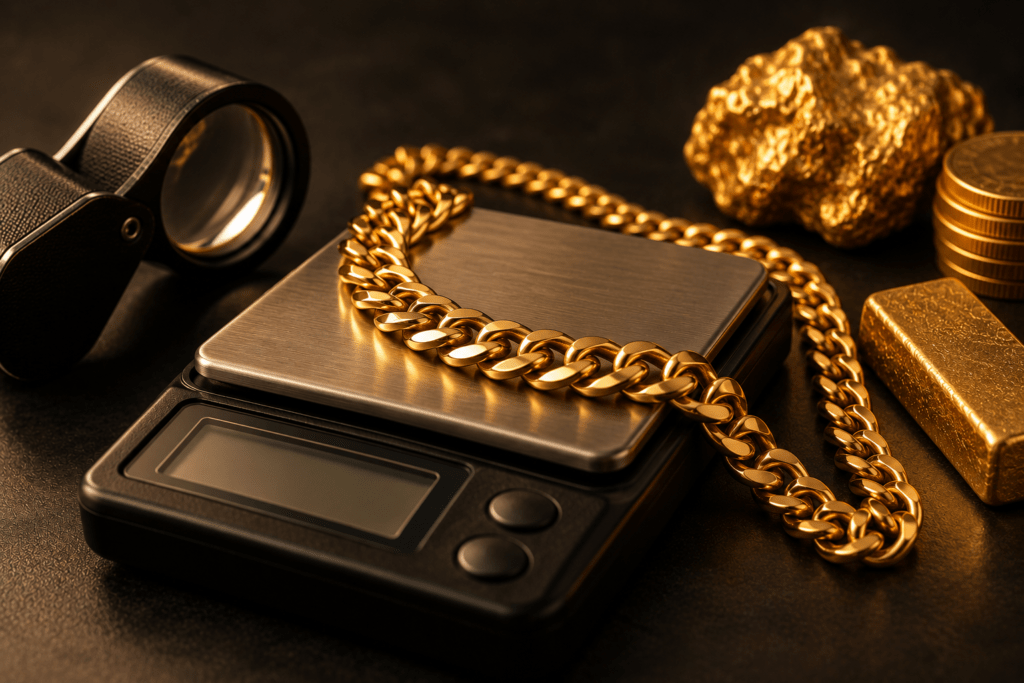
How much is your gold chain really worth? Learn how weight, karat, actual tested purity and the current gold price determine value—and why some chains may be worth more than their melt value.
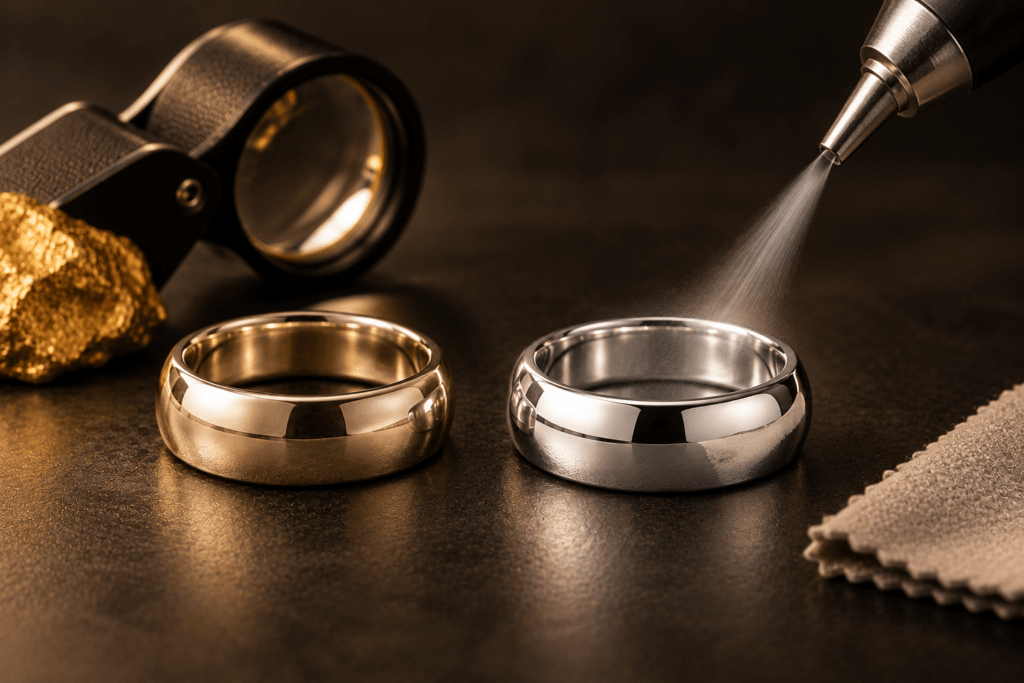
Rhodium gives white gold a bright surface finish. Learn why that finish wears, what a warmer color means and how plating relates to the underlying gold.
Learn what white gold contains and how it differs from silver and platinum. Karat markings, rhodium plating and professional testing help explain its value.