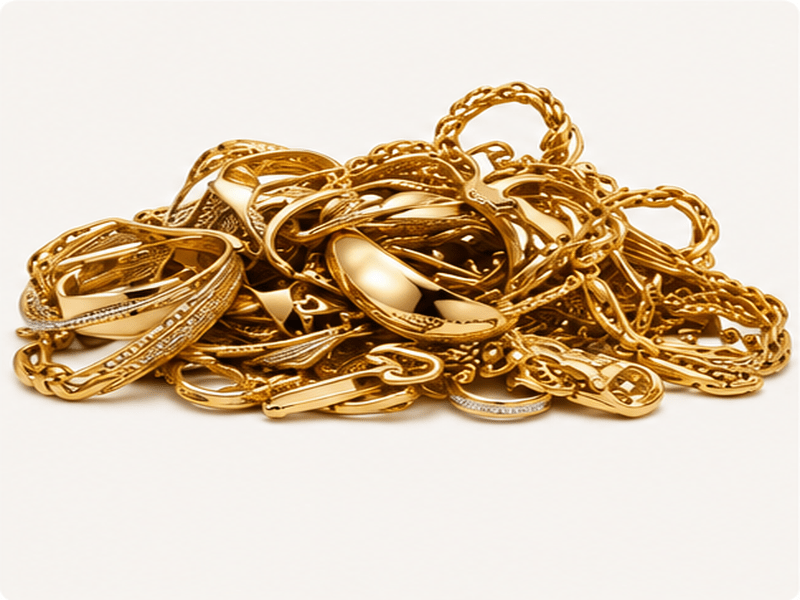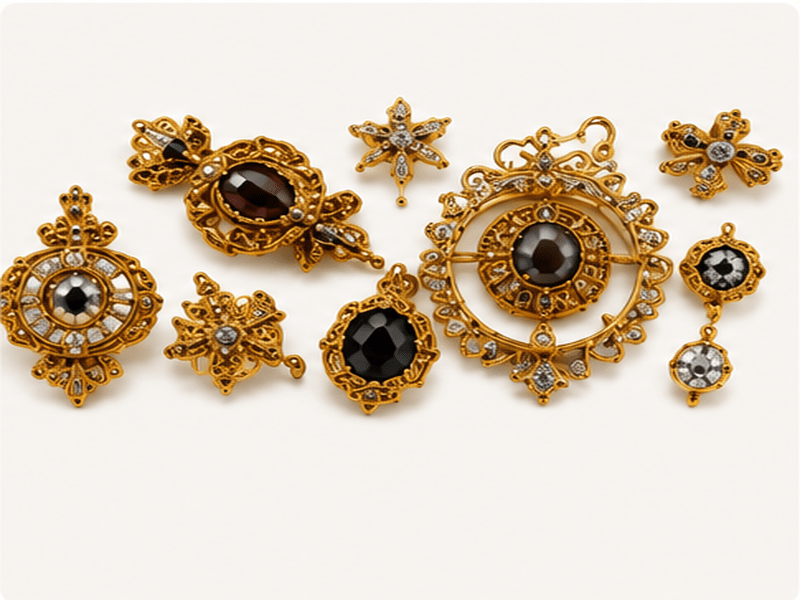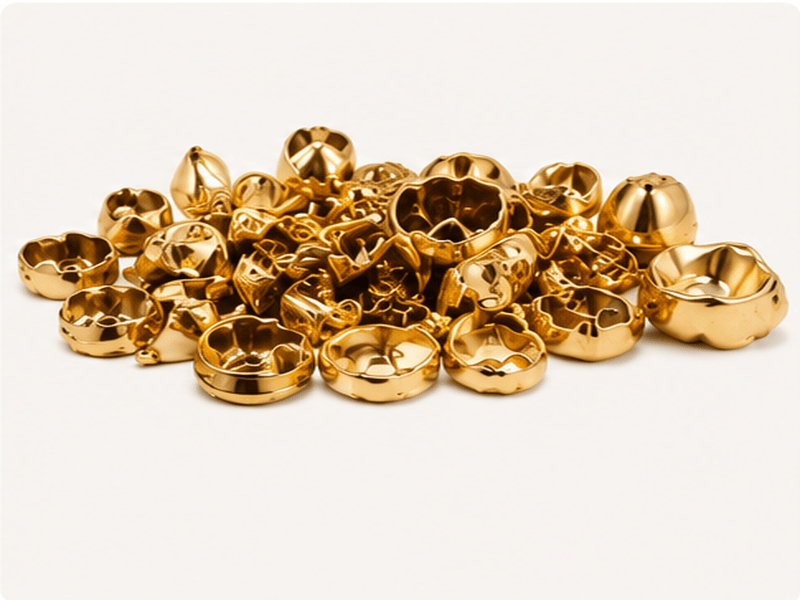
If gold jewelry is being sold strictly for its scrap gold value, being broken, bent, scratched, tangled, crushed, or otherwise damaged usually does not reduce the value of the gold that is still present.
A broken 14K chain is still made of 14K gold. A bent 18K ring still contains 18K gold. A single gold earring does not need its matching earring to have precious-metal value.
For ordinary scrap gold, the factors that matter most are:
- How much the item weighs
- Its actual gold purity
- How much real gold is present
- The current gold market price
- Whether stones or non-gold components are included in the weight
Damage becomes more important when gold is actually missing or when the jewelry could be worth more as a designer, antique, collectible, or gemstone piece than as scrap.
At Gold Kings, damaged jewelry can be professionally tested and weighed before you decide whether to sell it. There is normally no reason to repair an ordinary broken piece simply to find out what its gold is worth.
What Determines the Scrap Value of Gold Jewelry?
When jewelry is valued primarily for the precious metal it contains, appearance matters much less than it would if someone were buying the piece to wear.
A simplified scrap-gold calculation looks like this:
Gold weight × gold purity × current gold value = approximate precious-metal value
For example, suppose you have a 10-gram piece of 14K gold jewelry.
14K gold is approximately 58.3% pure gold. Jewelry marked 585 is intended to be approximately 58.5% gold.
A 10-gram piece testing around 58.5% gold would therefore contain approximately:
10 grams × 58.5% = 5.85 grams of pure gold
Whether that piece is beautifully polished or badly bent does not change those 5.85 grams of theoretical gold content.
The current gold price then helps determine the underlying market value.
The actual offer from a gold buyer may differ from theoretical melt value because refining, processing, market risk, and the characteristics of the individual item also have to be considered.
Damage That Usually Does Not Hurt Scrap Gold Value
Many things that make jewelry look ruined have little effect on its value as scrap.
| Type of damage | Typical effect on scrap value |
|---|---|
| Broken chain | Usually little or none if all the pieces remain |
| Bent ring | Usually none if no gold was lost |
| Tangled necklace | Usually none |
| Scratches | Usually negligible |
| Broken clasp | Usually little effect if the clasp remains |
| Single earring | Matching earring is not required |
| Crushed bracelet | Usually valued according to remaining metal |
| Missing stone | Gold setting can still have value |
| Outdated style | Usually irrelevant to scrap value |
That means the bottom of a jewelry box can sometimes be more valuable than it looks.
Broken chains, old class rings, single earrings, bent bracelets, damaged pendants, tangled necklaces, and mismatched jewelry can all still contain valuable gold.
If you have pieces like these, also see Can You Sell Broken Gold Jewelry? for a deeper explanation.
When Damage Can Reduce Gold Jewelry Value
There are important exceptions.
1. Part of the Gold Is Missing
This is the most obvious way damage can reduce scrap value.
Imagine a bracelet originally weighed 25 grams.
Several links break off and are lost, leaving only 21 grams.
The gold purity may not have changed at all, but you now have four fewer grams of gold alloy to sell.
Less gold weight means less total scrap value.
If you still have broken links, clasps, pieces of chain, or other fragments, bring them with the jewelry. Do not throw them away simply because they look unusable.
2. The Jewelry Was Worth More Than Scrap
Not every damaged piece of gold jewelry should automatically be treated as scrap.
Condition can matter considerably for:
- Designer jewelry
- Antique jewelry
- Estate jewelry
- Rare or collectible pieces
- High-end watches
- Jewelry from a recognized maker
- Pieces containing valuable diamonds or gemstones
For example, a designer bracelet may have a resale value well above the gold it contains when it is in excellent condition.
Serious damage could reduce that additional premium.
The underlying gold still has scrap value, but the jewelry value may have declined.
This distinction is important.
Before melting, cutting, repairing, or automatically selling an unusual piece for scrap, it may be smarter to have the whole item evaluated first.
You can read more about this decision in Is It Better to Sell Gold Jewelry or Melt It?.
3. Diamonds or Gemstones Are Missing or Damaged
Gold and gemstones should not automatically be treated as one thing.
Suppose a gold ring contains a valuable diamond.
Part of the ring’s potential value may come from:
- The gold setting
- The diamond
- The jewelry as a complete piece
If the diamond is lost or seriously damaged, the total jewelry value may decrease.
That does not, however, change the purity of the gold that remains.
A 14K gold setting does not stop being 14K simply because a stone falls out.
Likewise, jewelry with an empty stone setting can still have valuable gold in the mounting.
4. A Repair Added Different Metal
Jewelry can change during its lifetime.
An older ring may have been:
- Resized
- Soldered
- Repaired
- Rebuilt
- Fitted with a replacement clasp
- Joined with a different alloy
- Modified more than once
That means a piece stamped 14K may contain an area of repair that has a slightly different composition.
This is one reason a hallmark should be treated as useful information—not absolute proof of what every part of a piece contains.
Does a Gold Stamp Guarantee the Purity?
No.
Common markings include:
- 10K
- 14K
- 18K
- 22K
- 417
- 585
- 750
- 916
- 999
These stamps are useful indicators of intended purity.
But jewelry can also be repaired, altered, incorrectly marked, plated, filled, or counterfeit.
At Gold Kings, professional precious-metals testing can be used to help determine what an item actually contains instead of relying only on the stamp.
XRF testing is particularly useful because it can analyze the metallic composition of jewelry without destroying an ordinary piece. Because XRF primarily analyzes the surface, plated, filled, heavily soldered, or unusual items may require additional evaluation and interpretation.
That is much more useful than assuming an old stamp tells the entire story.
Should You Repair Broken Gold Before Selling It?
Usually not if you already intend to sell the jewelry for scrap.
Repairing a broken chain does not create additional gold.
For example:
A broken chain weighs 20 grams before repair.
You spend money having the clasp soldered back together.
The repaired chain still contains approximately the same amount of gold it contained before the repair.
If its primary value is the precious metal, the repair may simply become an additional expense.
Consider getting the jewelry evaluated before repairing it if:
- It is designer jewelry
- It appears antique
- It may be collectible
- It contains a significant diamond or gemstone
- It has sentimental value
- It might be worth considerably more intact than as scrap
For ordinary unwanted scrap jewelry, repairing it before obtaining an evaluation is usually unnecessary.
Should You Clean Damaged Gold Before Selling It?
You generally do not need to make scrap gold look new.
Polishing a ring does not increase its gold content.
A light cleaning is fine, but avoid aggressive work that could damage the piece or remove useful identifying information.
Before taking gold for evaluation, avoid:
- Filing it
- Cutting it apart
- Grinding it
- Removing hallmarks
- Using harsh chemicals
- Melting several pieces together
- Throwing away broken pieces
In most cases, simply bring the jewelry as it is.
What About Scratched Gold?
Normal scratches have very little effect on scrap gold value.
A scratched 14K ring is still made of the same alloy.
Extremely deep wear over many years can technically remove tiny amounts of metal, but the issue is still weight, not appearance.
If the ring weighs less because metal has physically worn away, there is slightly less gold.
The scratch itself is not what makes the remaining gold less valuable.
What About a Broken Gold Chain?
A broken chain is one of the clearest examples.
Suppose two chains are identical:
Chain A
- 14K gold
- 20 grams
- Perfect clasp
- Excellent condition
Chain B
- 14K gold
- 20 grams
- Broken clasp
- Cannot be worn
If both are being purchased strictly for precious-metal value and both actually contain the same alloy, their underlying gold content is essentially the same.
Now suppose several pieces of Chain B have been lost and it weighs only 17 grams.
That changes the equation.
The condition itself did not lower its scrap value.
The missing three grams did.
What About Jewelry With Missing Stones?
Gold jewelry can still be valuable even if stones have fallen out.
A ring with an empty setting may still contain exactly the same gold alloy around that setting.
If gold prongs or parts of the mounting broke away with the stone, a small amount of gold may also be missing.
If stones remain in a piece, their weight may need to be considered when determining the actual amount of precious metal present.
This is another reason accurate weighing and professional evaluation matter.
Gold-Plated Jewelry Is Different
A damaged piece that looks gold-colored is not necessarily solid gold.
Solid Karat Gold
Jewelry marked 10K, 14K, 18K, or 22K is intended to contain gold throughout the alloy.
Gold-Plated Jewelry
Gold plating generally consists of a very thin layer of gold over another metal.
It should not be valued like solid-karat jewelry.
Gold-Filled Jewelry
Gold-filled jewelry contains more gold than ordinary plating but is still constructed differently from solid 10K, 14K, or 18K gold.
If you cannot identify a damaged piece, do not assume it is worthless—or assume it is solid gold.
Having it tested is the better approach.
Scrap Value vs. Jewelry Value
This is the biggest concept to understand.
Scrap Gold Value
When jewelry is being valued as scrap, the major questions are:
- How much does it weigh?
- What purity is it?
- How much actual gold does it contain?
- What is gold currently worth?
- Are there non-gold materials that need to be accounted for?
Appearance usually plays a relatively small role.
Jewelry Resale Value
Resale value can also depend on:
- Condition
- Brand
- Designer
- Age
- Style
- Craftsmanship
- Rarity
- Diamonds
- Gemstones
- Collector demand
A badly damaged designer bracelet might lose a significant portion of its resale premium while still retaining the underlying value of its gold.
That is why the right question is sometimes not simply:
“How much gold is in this?”
It is:
“Is this piece worth more as jewelry than it is as scrap?”
Have Damaged Gold Jewelry Tested at Gold Kings
If you have broken chains, bent rings, single earrings, missing clasps, tangled necklaces, damaged bracelets, old class rings, or jewelry you simply cannot identify, you do not have to repair it before finding out what it contains.
Gold Kings can test and weigh precious-metal items and explain the factors affecting their value before you decide whether to sell.
You can also review what Gold Kings buys before your visit.
Gold Kings of Snellville
Customers in Gwinnett County and surrounding communities can visit Gold Kings of Snellville.
Gold Kings of Snellville evaluates damaged gold jewelry, scrap gold, gold and silver coins, bullion, silver, watches, estate jewelry, and other precious-metal items.
Bring the jewelry in the condition it is currently in. Broken, bent, scratched, tangled, or mismatched pieces can still be evaluated.
Gold Kings of Commerce
Customers in Commerce, Banks Crossing, Jackson County, Banks County, and surrounding Northeast Georgia communities can visit Gold Kings of Commerce.
The Commerce location evaluates gold jewelry, scrap gold, silver, coins, bullion, watches, estate jewelry, and other qualifying valuables.
You do not need to make damaged jewelry look new before bringing it in.
Looking for a Scrap Gold Buyer Near You?
If you are searching for a scrap gold buyer near me, sell gold jewelry near me, or simply trying to figure out where to sell damaged gold, do not judge a buyer only by distance.
Before agreeing to sell, you should understand:
- What does my jewelry weigh?
- What purity did it test?
- Are stones or non-gold components being accounted for?
- What gold price is being used?
- Is the piece being valued as jewelry or strictly as scrap?
- How was the offer calculated?
A transparent evaluation should help you understand what you own before you decide what to do with it.
At Gold Kings, testing and weighing are part of that process.
Frequently Asked Questions
Does a broken gold chain lose value?
Usually not simply because it is broken. If all of the gold remains and the chain is being valued for scrap, its weight and purity matter much more than whether it can still be worn.
Is a bent gold ring worth less?
Not necessarily as scrap. If the ring still has the same weight and purity, bending the metal does not remove gold.
Are scratched gold rings worth less as scrap?
Ordinary scratches generally have little effect. Significant wear matters only to the extent that actual metal has been lost.
Can I sell one gold earring?
Yes. A matching earring is not required for the remaining earring to contain valuable gold.
Can I sell gold jewelry with missing stones?
Yes. The gold setting can still have precious-metal value. Significant diamonds or gemstones that remain may need separate consideration.
Does a missing clasp lower the value?
If a solid-gold clasp has been completely lost, there is less total gold weight. If the clasp is simply broken but still present, the effect on scrap value may be minimal.
Should I repair broken gold before selling it?
Usually not if you plan to sell it strictly for its precious-metal value. Have potentially valuable designer, antique, collectible, or gemstone jewelry evaluated before making that decision.
Is damaged 14K gold still 14K?
Physical damage such as bending or scratching does not change the alloy. However, previous repairs, solder, plating, or replacement parts can cause different areas of an item to test differently.
How can I tell if damaged jewelry is real gold?
Hallmarks are a good starting point, but professional testing provides much better information about what the item actually contains.
Where can I sell damaged gold jewelry in Georgia?
Gold Kings evaluates damaged and scrap gold jewelry at Gold Kings of Snellville and Gold Kings of Commerce.
Before You Throw Away Broken Jewelry, Find Out What It Contains
A broken chain does not stop being gold.
Neither does a bent ring, scratched pendant, single earring, damaged bracelet, or necklace with a missing clasp.
For ordinary scrap jewelry, weight, actual purity, and the current gold market matter far more than appearance.
The major exceptions are pieces where actual gold has been lost or jewelry that has additional value because of its designer, rarity, condition, diamonds, gemstones, or collectibility.
Before spending money repairing unwanted jewelry—or tossing a damaged piece into the trash—find out what it actually contains.
Visit Gold Kings of Snellville or Gold Kings of Commerce to have damaged gold jewelry tested and evaluated.
Bring it broken, bent, scratched, tangled, or mismatched. What matters most is not how it looks—it is what it actually contains.