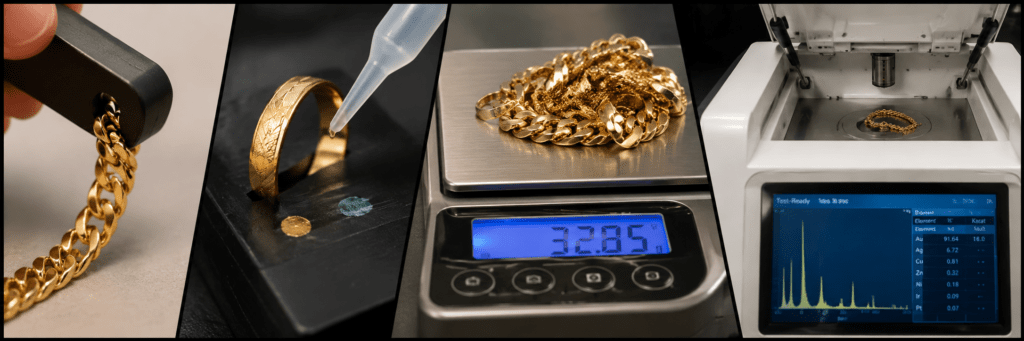
Gold Testing & Authenticity
Learn how real gold is tested using XRF, acid, magnets, density, electronic testers, and other methods used to identify genuine and counterfeit gold.
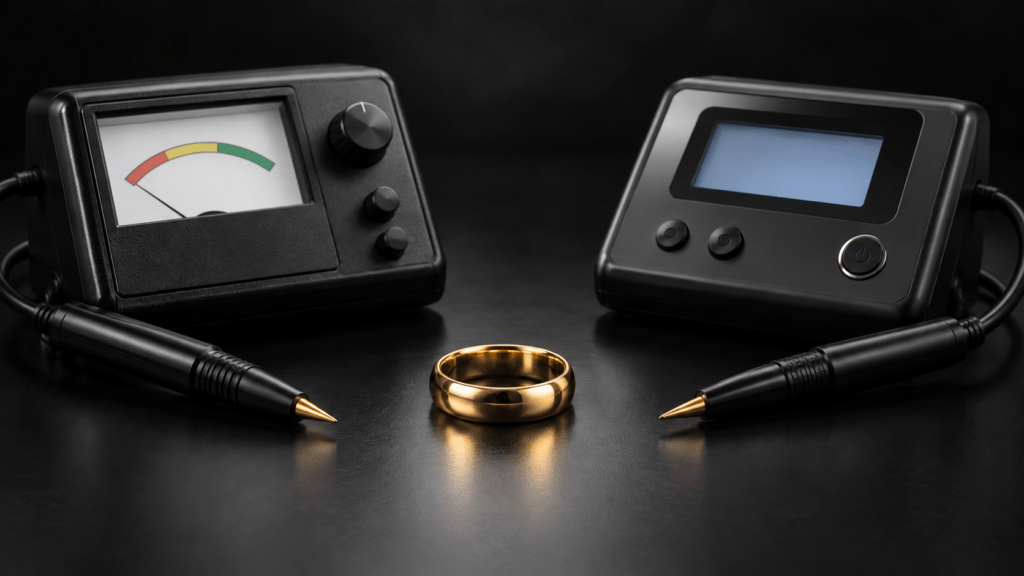
Learn the KEE gold tester's basic calibration workflow, reference checks, probe care and common mistakes before testing unknown jewelry.
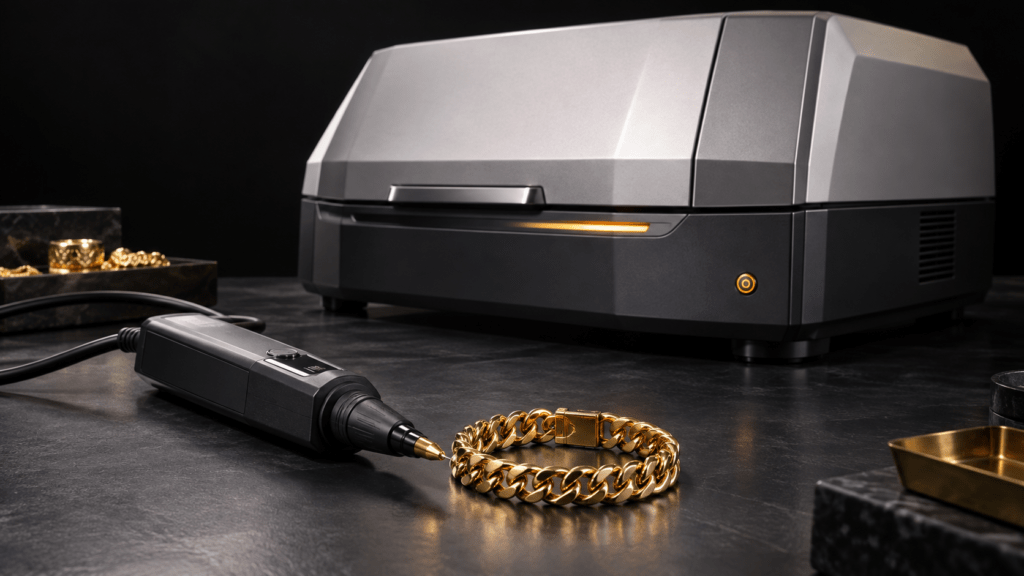
Understand the difference between pen-probe gold testers and XRF analysis, including surface limitations, ownership costs and buying checks.
Compare the KEE and GemOro AuRACLE PRO by display, calibration, probe care and workflow before choosing an electronic gold tester.
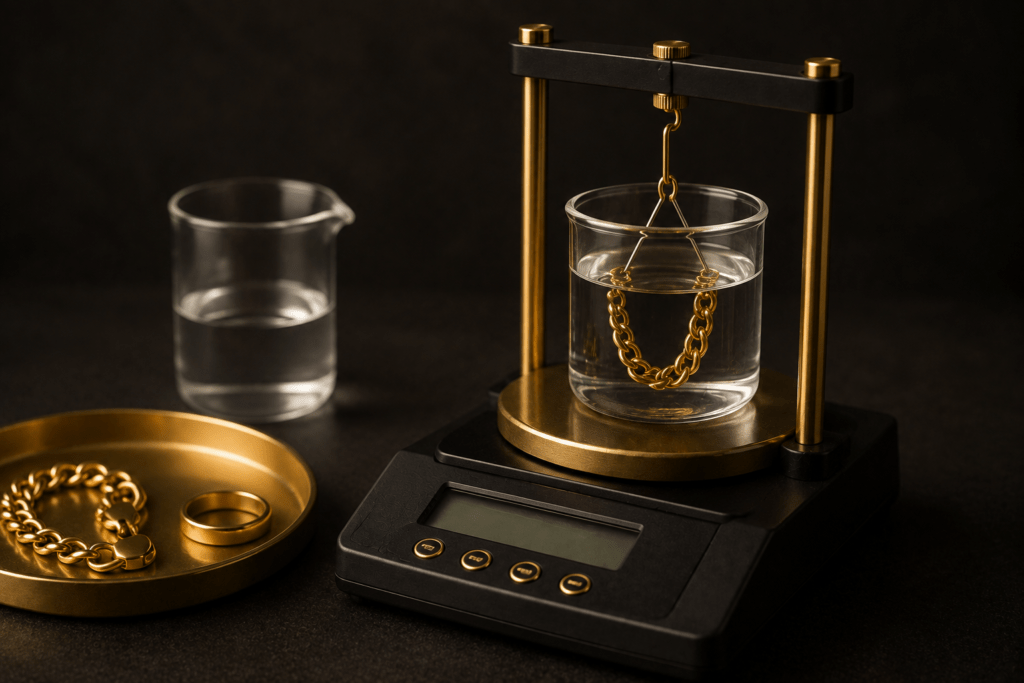
A density test can provide a clue about gold authenticity, but jewelry construction and mixed materials complicate the result. Learn the method and its limitations.
Gold acid testing is one of the oldest ways to determine whether jewelry is real gold and estimate its karat. Here is how the test works, what the results mean, and where it can go wrong.
A magnet can help identify some fake gold, but it cannot prove that an item is real gold. Learn how the magnet test works, what the results mean, and when professional gold testing is the better choice.
An XRF gold tester can identify the metals in a piece of jewelry in seconds without damaging it. Here is how XRF testing works and what the results can tell you about your gold.
Does real gold have to be stamped?
No. Real gold does not always have to be stamped. Genuine jewelry may be unmarked because the stamp wore away, the item was resized or repaired, or it was never visibly marked. A stamp such as 10K, 14K, 585 or 750 is helpful, but professional testing is the best way to confirm gold purity.
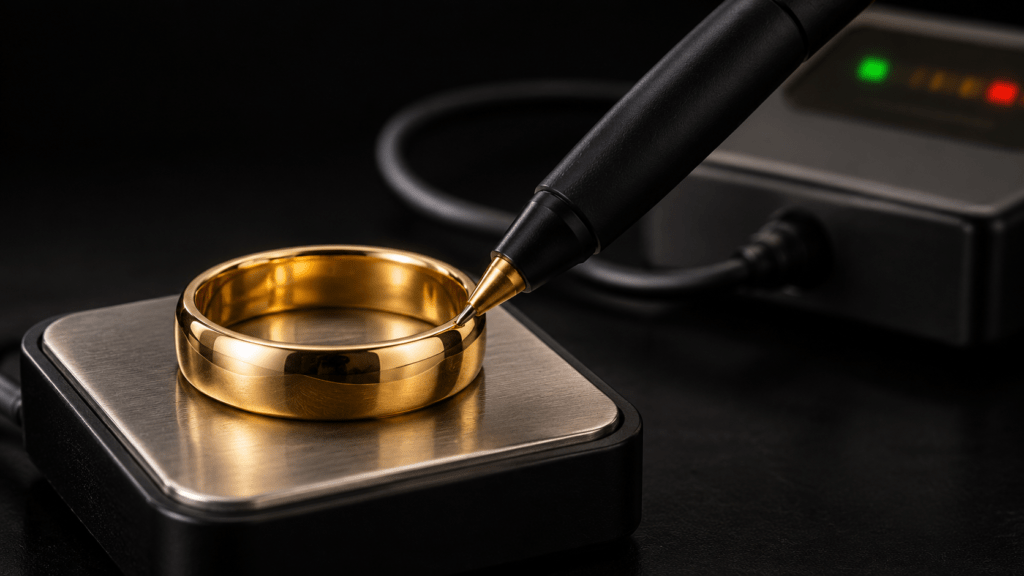
Explore five ways to check whether gold may be real, from hallmarks and magnets to professional testing, and understand why a single home test is not conclusive.
Choose Your Location
Gold Kings of Snellville
- 3635 Stone Mountain Hwy, Snellville, GA 30039
- 770-771-4650
Gold Kings of Commerce
- 480 Banks Crossing Dr, Commerce, GA 30529
- 706-336-0043