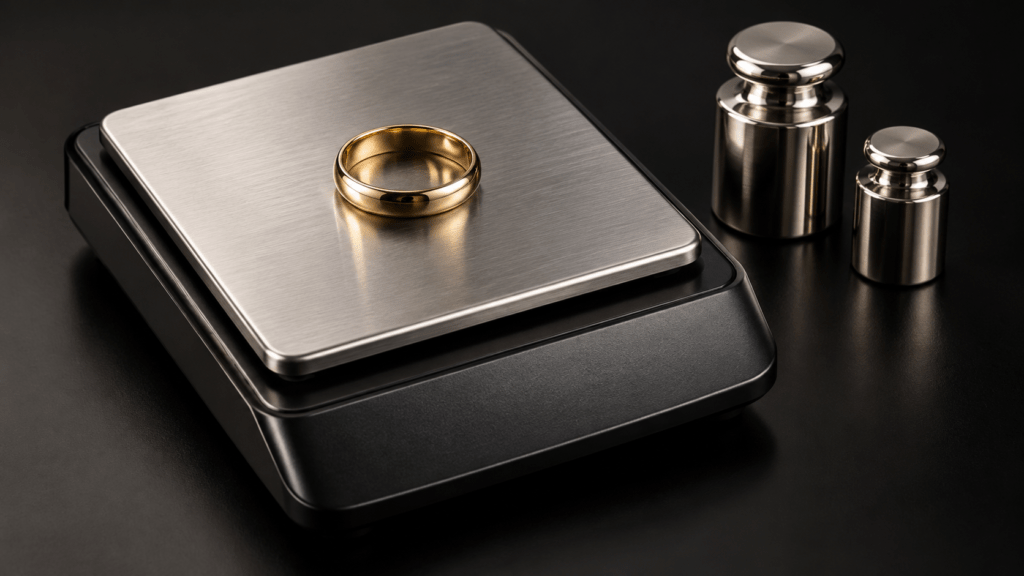
Choose a scale that can hold your heaviest item and resolve the differences you need to see. A model displaying 0.001 g is not automatically a better jewelry scale than one displaying 0.01 g.
Understand the three specifications
- Capacity: the maximum load, including any tray or container.
- Readability: the smallest displayed increment.
- Accuracy: how closely a measurement agrees with the true value under specified conditions.
Readability is not an accuracy guarantee. Repeatability also matters: if you remove and replace the same object several times, do the readings agree closely enough for your purpose? Taring a container sets the display to zero but does not increase the scale’s physical capacity.
Match capacity to what you weigh
| Example in our store | Listed capacity and readability | Useful comparison |
|---|---|---|
| Weigh Gram pocket scale | 200 g × 0.01 g | General small jewelry items |
| MAXUS pocket scale | 500 g × 0.01 g | Heavier pieces or a larger combined load |
| AWS GEMINI-20 | 20 g × 0.001 g | Small samples within a much lower capacity |
A one-troy-ounce silver coin weighs roughly 31.1 g, so it exceeds a 20 g scale’s capacity. That simple check can prevent buying a finely graduated instrument that cannot weigh the coins you own. For gemstone work, check the intended carat use and measurement tolerances rather than relying on a conversion button alone.
MAXUS 500g × 0.01g Digital Pocket Jewelry Scale
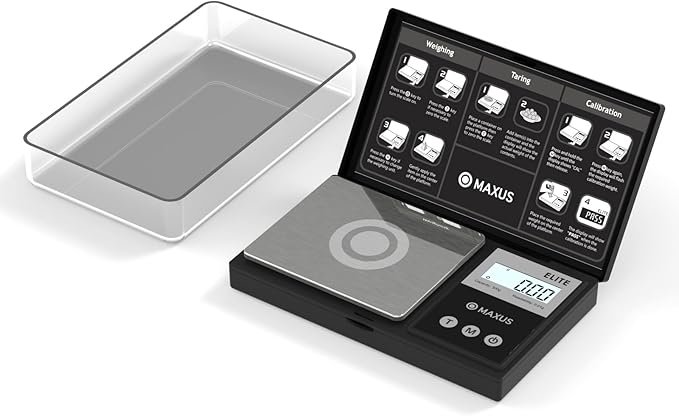
Compare a 500 g capacity model for general jewelry and coin weighing. Check platform size as well as capacity.
American Weigh Scales GEMINI-20 20g × 0.001g Milligram Scale
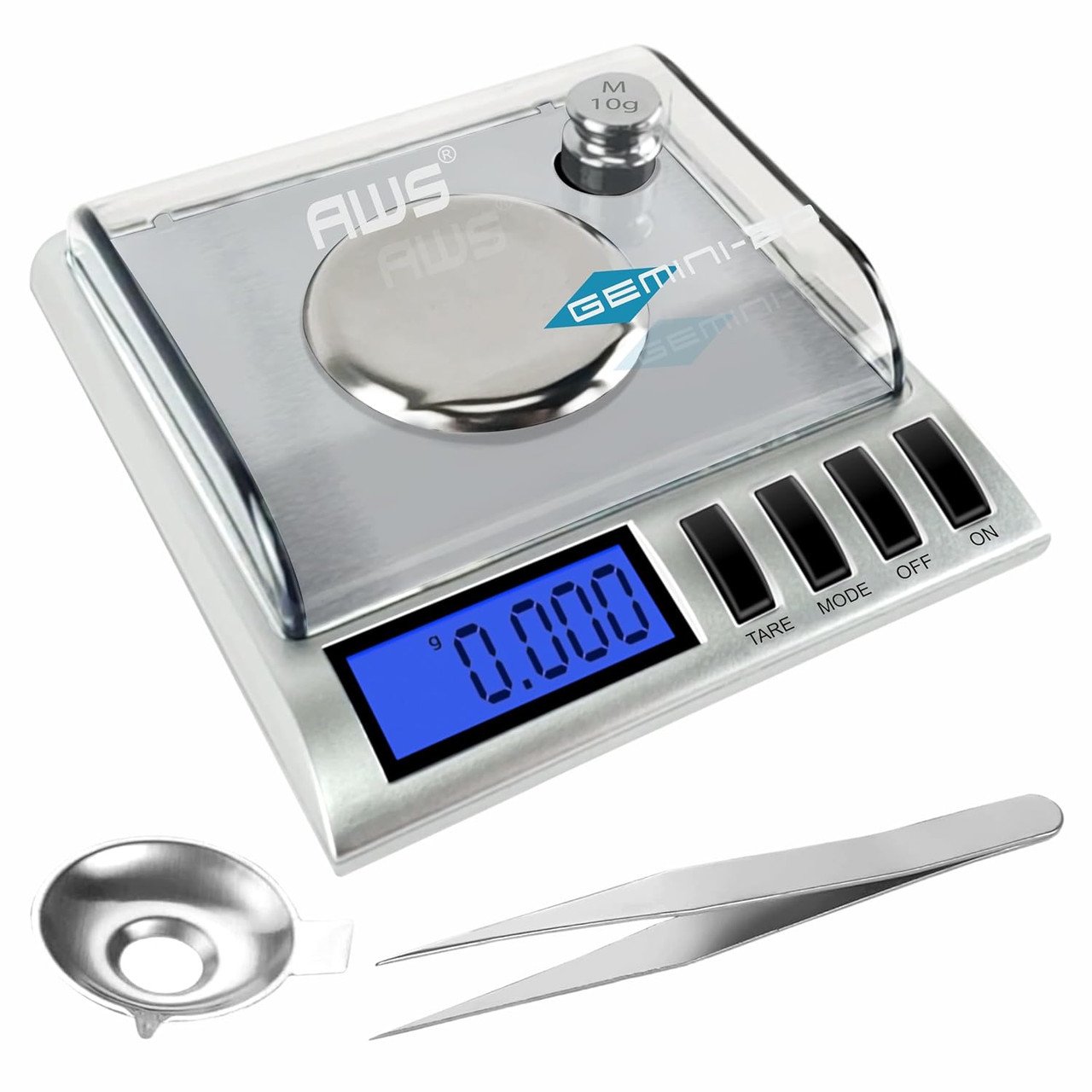
Consider a milligram-display model only when its 20 g capacity fits your samples.
Use the correct calibration weight
Read the model’s manual before buying a weight. A 100 g calibration weight is not a universal accessory and must never be placed on a 20 g scale. The AWS GEMINI-20 product information describes its 20 g capacity and supplied calibration reference; confirm the contents of the actual offer.
Calibration adjusts the instrument according to its procedure. A check weight helps you assess whether it is behaving as expected. Neither process makes a low-cost scale suitable for every commercial or laboratory purpose.
Set up a repeatable weighing routine
- Place the scale on a firm, level surface away from drafts and vibration.
- Allow the preparation or warm-up time specified by the manual.
- Select grams or the correct unit; do not confuse ordinary ounces with troy ounces.
- Check zero, then tare an empty container if needed.
- Place the item centrally, allow the reading to stabilize and repeat the measurement.
- If results drift, inspect the setup and follow the manufacturer’s troubleshooting steps.
AWS publishes model-specific manuals; use the appropriate manual for any other brand as well.
The Gold Kings buying recommendation
For home sorting, prioritize sufficient capacity, repeatable readings and a suitable reference weight. For determining payment in a business, verify the required trade approval and suitability before choosing a pocket scale. A retail product listing by itself does not establish that approval.
Weight also does not tell you purity. Stones and non-gold components contribute to gross jewelry weight. Read how jewelry weight affects gold value and grams versus pennyweight before calculating metal content.
Other scales and calibration weights to compare
Compare these listings against your required capacity and the calibration procedure for your exact model. The 100 g weight is only appropriate where that mass is specified and supported.
- American Weigh Scales 100WGT 100g Calibration Weight
- Smart Weigh 500g × 0.01g Digital Pocket Scale
- Fuzion 200g × 0.01g Digital Pocket Scale with 50g Weight
- Weigh Gram 200g × 0.01g Digital Pocket Scale with 100g Weight
Explore all Gold Kings buying guides.
As an Amazon Associate I earn from qualifying purchases. The product pages linked in this article contain Amazon affiliate links. This guide is based on published specifications and practical buying considerations, not a controlled hands-on product test.