A dependable KEE routine starts with a known reference, not an unknown ring. Calibrate first, practice with known samples and investigate inconsistent results before making a buying decision.
What to have ready
Have the correct KEE manual, a suitable known 18K yellow-gold reference, the connected probe and a clean work area. A hallmark alone is not enough to establish that an unknown piece is a reliable calibration reference. Read the instructions for your model if its connections or controls differ from those described here.
Basic calibration and testing sequence
- Check power and connections. Connect the red probe lead to a red positive socket and the probe. Follow the manual’s battery check before beginning.
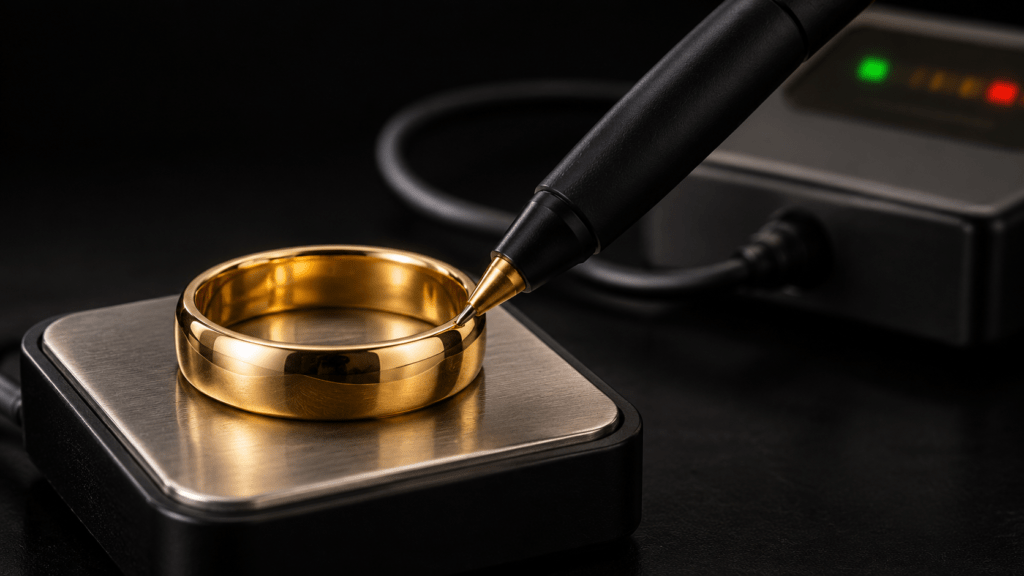
- Set up the reference. Put known 18K yellow gold on the clean, dry test plate. Uncap the probe and gently remove any tip crystallization as instructed.
- Make light contact. Hold the reference on the plate and lightly touch it with the probe. Wait for the needle to settle.
- Adjust calibration. While maintaining contact, use the calibration dial to position the settled needle in the center of the white 18K zone.
- Check known samples before unknowns. Recheck the reference periodically and whenever readings become questionable.
- Finish properly. Secure the probe cap and switch the tester off.
This sequence summarizes the KEE basic instructions and illustrated operating instructions. Keep the complete manual available while working.
Prepare the test area thoughtfully
Testing a surface coating is different from testing the material beneath it. Follow the manufacturer’s preparation procedure for suspected plated items. Filing leaves a mark: obtain permission before doing it, and seek specialist advice for collectible coins, antique jewelry or items whose finish contributes to their value.
Separate the questions “what did this location indicate?” and “what is the entire object made from?” A clasp, solder joint and main body may not represent the same material. Record where you tested so that later checks can be compared meaningfully.
Common mistakes to avoid
| Mistake | Better practice |
|---|---|
| Calibrating against an unverified stamped item | Use a trustworthy known reference |
| Reading the first needle movement | Wait for a stable indication |
| Pressing harder to force a result | Use light contact; check preparation and reference |
| Leaving the probe uncapped | Cap it between sessions to prevent drying |
| Treating a hallmark as proof | Compare the result with other evidence |
The KEE FAQ explains that dirty samples, aging probes and drying tips can affect behavior. It also gives a specific probe-health check. Follow that check rather than adding liquid to a probe or changing calibration until an unknown item displays the number you expected.
When to stop and get another opinion
If the known reference will not read consistently, stop testing unknowns. Review the manual, inspect the setup and contact the supplier if necessary. If the reference behaves normally but the item does not, the item needs further investigation. A screening result should not become a confident purity claim simply because a sale depends on it.
KEE Gold Tester — Electronic Gold & Platinum Tester
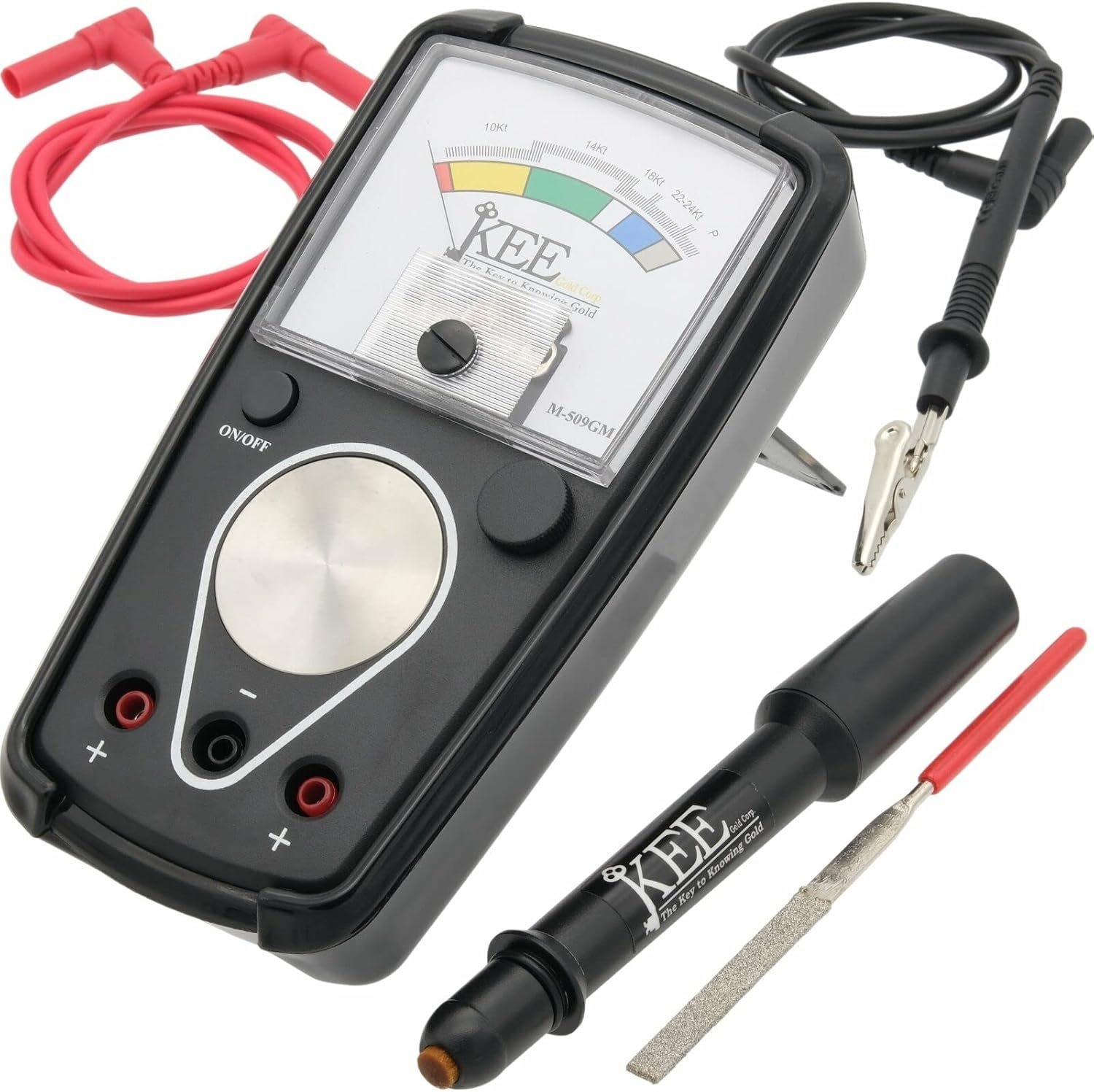
Review the tester and current package contents. Confirm the calibration reference is included or budget for one separately.
Still choosing equipment? See KEE vs. AuRACLE PRO and what XRF adds to electronic screening.
Explore all Gold Kings buying guides.
As an Amazon Associate I earn from qualifying purchases. The product pages linked in this article contain Amazon affiliate links. This guide is based on published specifications and practical buying considerations, not a controlled hands-on product test.