
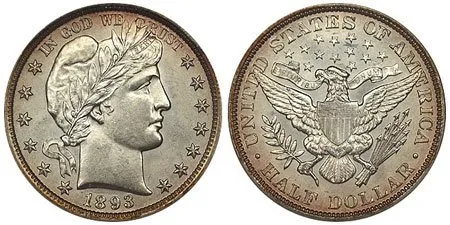
Silver half dollars are among the most recognizable U.S. silver coins. Depending on the year and type, a half dollar may contain 90% silver, 40% silver, or no silver at all.
Some are primarily valuable for their silver content, while rare dates and better-condition coins can be worth considerably more to collectors.
At Gold Kings, we evaluate silver half dollars for both their precious-metal value and their potential collectible value before making an offer.
Which Half Dollars Are Silver?
Here is the easiest way to identify the most common U.S. silver half dollars:
| Half Dollar | Years | Silver Content |
|---|---|---|
| Barber Half Dollar | 1892–1915 | 90% silver |
| Walking Liberty Half Dollar | 1916–1947 | 90% silver |
| Franklin Half Dollar | 1948–1963 | 90% silver |
| Kennedy Half Dollar | 1964 | 90% silver |
| Kennedy Half Dollar | 1965–1970 | 40% silver |
| Most circulation Kennedy Half Dollars | 1971–present | No silver* |
*Some special collector and proof issues were produced with silver. If you are unsure what you have, let us examine the coin before assuming it is only worth face value.
How Much Silver Is in a Half Dollar?
A standard U.S. 90% silver half dollar originally contained approximately:
0.3617 troy ounce of pure silver
That includes:
- Barber half dollars
- Walking Liberty half dollars
- Franklin half dollars
- 1964 Kennedy half dollars
Kennedy half dollars dated 1965 through 1970 contain 40% silver and approximately:
0.1479 troy ounce of pure silver
Because silver prices change throughout the day, the melt value of these coins also changes.
Simple Silver Half Dollar Melt Formula
For a 90% silver half dollar:
Silver spot price × 0.3617 = approximate silver value
For a 40% Kennedy half dollar:
Silver spot price × 0.1479 = approximate silver value
However, melt value is only part of the story. Some silver half dollars are worth considerably more because of their date, mint mark, rarity or condition.
Barber Half Dollars: 1892–1915
The Barber half dollar was produced from 1892 through 1915.
These coins contain 90% silver and feature Liberty on the front with an eagle on the reverse.
Many circulated Barber half dollars are bought primarily for their silver and collectible value, but certain dates and mint marks deserve much closer inspection.
Dates that can be particularly important include:
- 1892-O
- 1892-S
- 1893-S
- 1897-O
- 1897-S
- 1904-S
- 1914
Condition can make an enormous difference in the value of a Barber half dollar.
A heavily circulated example and a high-grade example of the same date can be worth dramatically different amounts.
Where Is the Mint Mark on a Barber Half Dollar?
Barber half dollars were produced at several U.S. Mint facilities.
Possible mint marks include:
- No mint mark: Philadelphia
- O: New Orleans
- S: San Francisco
- D: Denver
The mint mark is located on the reverse of the coin beneath the eagle.
Don’t Clean Old Silver Coins
If you discover old Barber half dollars, do not polish or clean them.
Cleaning a collectible coin can damage its original surfaces and may substantially reduce its numismatic value.
Bring the coins in exactly as you found them.
Walking Liberty Half Dollars: 1916–1947
Walking Liberty half dollars were minted from 1916 through 1947 and contain 90% silver.
The famous Walking Liberty design appears on the front of the coin, while an American eagle appears on the reverse.
The design became so popular that a version of it was later used for the American Silver Eagle bullion coin.
Walking Liberty halves remain popular with both silver buyers and coin collectors.
Even heavily circulated examples contain significant silver value, while certain dates, mint marks and higher-grade coins may command additional collector premiums.
Before selling Walking Liberty half dollars strictly as scrap silver, it is worth having them examined individually.
Franklin Half Dollars: 1948–1963
Franklin half dollars were produced from 1948 through 1963.
Every regular-issue Franklin half dollar contains:
90% silver and 10% copper
The front features Benjamin Franklin, while the reverse depicts the Liberty Bell.
Because the entire Franklin half-dollar series was produced in 90% silver, identifying its silver content is simple:
If it is a genuine Franklin half dollar, it is 90% silver.
Like other older U.S. coins, Franklin half dollars can sometimes be worth more than their basic silver value because of condition, mint mark or collector demand.
1964 Kennedy Half Dollars
The Kennedy half dollar was introduced in 1964 following the assassination of President John F. Kennedy.
The 1964 Kennedy half dollar contains 90% silver.
It was the final regular U.S. half dollar produced for circulation with 90% silver content.
Because so many people saved Kennedy half dollars when they were released, 1964 examples remain relatively common today.
That does not make them worthless.
Every genuine 1964 Kennedy half dollar still contains approximately 0.3617 troy ounce of pure silver, giving the coin significant value whenever silver prices are elevated.
Higher-quality, unusual or collectible examples may be worth more.
1965–1970 Kennedy Half Dollars: 40% Silver
The U.S. Mint reduced the silver content of Kennedy half dollars after 1964.
Kennedy half dollars dated:
1965, 1966, 1967, 1968, 1969 and 1970
contain 40% silver.
Each contains approximately 0.1479 troy ounce of pure silver.
These coins are sometimes overlooked because they do not have the same 90% silver content as the 1964 Kennedy half dollar.
But they are still genuine silver coins and can be worth considerably more than their 50-cent face value.
If you have a jar, bag or collection of older Kennedy half dollars, check the dates before spending them.
Are Half Dollars After 1970 Silver?
Most Kennedy half dollars produced for normal circulation beginning in 1971 are copper-nickel clad and do not contain silver.
However, there are exceptions.
The U.S. Mint has produced special collector versions and proof coins containing silver.
Because of this, you should not automatically assume that every modern-looking Kennedy half dollar is worthless.
If you are unsure, Gold Kings can examine it.
What Determines the Value of a Silver Half Dollar?
We look at several factors when evaluating a silver half dollar.
1. Silver Content
The first consideration is whether the coin contains 90% silver, 40% silver or another composition.
2. Current Silver Price
Silver prices move constantly, which means the melt value of your coins changes with the market.
3. Date
Some dates were produced in much smaller quantities than others.
4. Mint Mark
The same coin and year can have very different values depending on where it was minted.
5. Condition
Collectors call a coin’s condition its grade.
A coin with sharp details and minimal wear can be considerably more valuable than the same coin in heavily circulated condition.
6. Collector Demand
Certain coin series, dates and varieties are especially popular among collectors.
That collector demand can push the value above the coin’s silver melt value.
Silver Value vs. Collector Value
One of the biggest mistakes people make when selling old coins is assuming every silver coin should be valued strictly by weight.
For common circulated coins, silver content may represent most of the value.
But a scarce date or exceptionally well-preserved coin may have a numismatic value considerably higher than melt value.
That is why Gold Kings examines the coins before treating them as ordinary silver.
Should I Clean My Silver Half Dollars Before Selling Them?
No.
Do not:
- polish them
- use silver cleaner
- scrub them
- use chemicals
- use an abrasive cloth
- attempt to make them shiny
Collectors generally prefer coins with their original surfaces.
Cleaning can permanently reduce the collectible value of a coin.
Simply bring the coins to us as they are.
Have a Bag or Collection of Silver Half Dollars?
You do not need to research every coin yourself.
Whether you have:
- one old half dollar
- a handful of Kennedy halves
- rolls of silver coins
- inherited coins
- a coin collection
- a jar of old change
- hundreds of silver half dollars
Gold Kings can examine what you have.
If your collection also includes other denominations, our guides to silver dollars and silver quarters can help you identify other common U.S. silver coins.
We can identify the silver coins, separate potentially collectible pieces and evaluate the lot based on current precious-metal values.
Sell Your Silver Half Dollars to Gold Kings
If you have Barber, Walking Liberty, Franklin or Kennedy half dollars, bring them to Gold Kings of Snellville or Gold Kings of Commerce for an evaluation.
We will examine your coins, identify their silver content and look for coins that may deserve additional consideration because of rarity or collector value.
We test it. We weigh it. We pay you.
Have silver half dollars you want to sell?
Contact Gold Kings today for a free quote.
Frequently Asked Questions About Silver Half Dollars
Are all half dollars before 1965 silver?
The major U.S. half-dollar series produced before 1965—including Barber, Walking Liberty and Franklin half dollars—contain 90% silver. The 1964 Kennedy half dollar is also 90% silver.
Is a 1964 Kennedy half dollar silver?
Yes. A 1964 Kennedy half dollar contains 90% silver.
Are 1965 Kennedy half dollars silver?
Yes. Kennedy half dollars dated from 1965 through 1970 contain 40% silver.
How much silver is in a 1964 Kennedy half dollar?
A 1964 Kennedy half dollar originally contained approximately 0.3617 troy ounce of pure silver.
How much silver is in a 40% Kennedy half dollar?
A 1965–1970 Kennedy half dollar contains approximately 0.1479 troy ounce of pure silver.
Are Franklin half dollars silver?
Yes. Regular Franklin half dollars produced from 1948 through 1963 contain 90% silver.
Are Walking Liberty half dollars silver?
Yes. Walking Liberty half dollars produced from 1916 through 1947 contain 90% silver.
Are Barber half dollars silver?
Yes. Barber half dollars produced from 1892 through 1915 contain 90% silver.
Should I clean old silver coins before selling them?
No. Cleaning can damage a coin’s original surface and reduce its collector value.
Can a silver half dollar be worth more than its melt value?
Absolutely. Rare dates, mint marks, varieties and high-grade coins can have collector value well above their silver content.